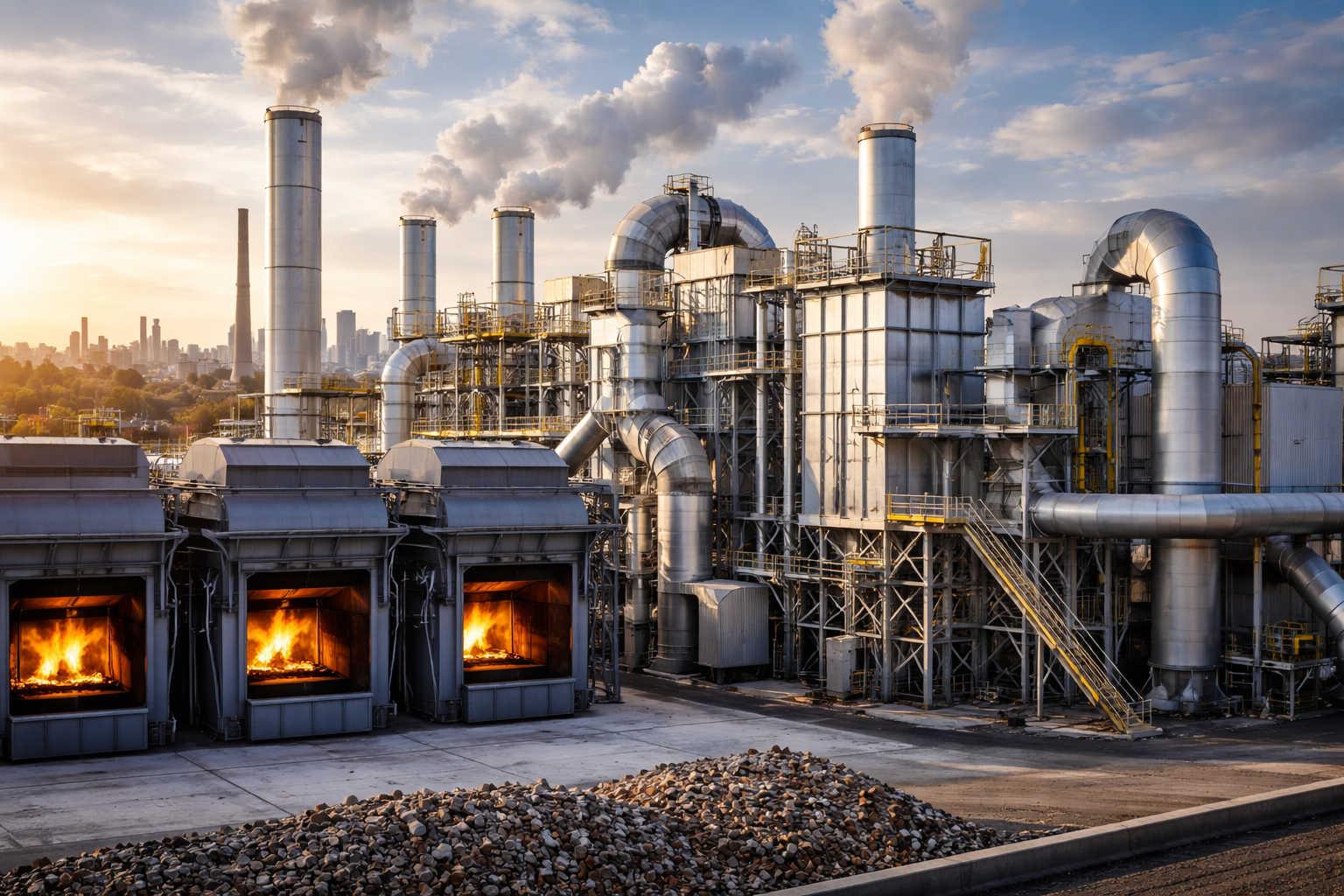
Advanced Waste Incineration Systems and Standards
The Role of Incineration in Modern Waste Management
Waste management has become one of the most pressing environmental challenges of the 21st century. According to data from the World Bank and the OECD, global waste generation is projected to grow significantly in the coming decades due to urbanization, industrial expansion and population growth. In this context, waste incineration systems represent a consolidated technological solution for reducing waste volume, managing hazardous materials and ensuring sanitary safety.
Incineration is a controlled thermal process that converts waste into ash, flue gas and heat. When properly engineered and operated, it allows for substantial volume reduction, often up to 90 percent, and mass reduction of approximately 70 percent. This makes it particularly relevant for medical waste, animal by products and certain industrial residues that cannot be safely landfilled.
Modern incineration is no longer associated with outdated and polluting systems. Today’s facilities are designed in accordance with strict environmental regulations, including European directives on industrial emissions and international standards governing atmospheric pollutants. The focus is on combustion efficiency, emission control and energy optimization, ensuring that the process meets both environmental and public health requirements.
Environmental Standards and Emission Control Technologies
One of the key aspects of contemporary incineration systems is compliance with environmental standards. In the European Union, the Industrial Emissions Directive establishes emission limits for substances such as nitrogen oxides, sulfur dioxide, particulate matter and dioxins. Similar regulatory frameworks exist in other advanced economies, requiring continuous monitoring and advanced filtration systems.
Modern plants integrate multiple layers of emission control, including:
-
Secondary combustion chambers to ensure complete oxidation of gases
-
High temperature refractory linings for thermal stability
-
Flue gas cooling systems
-
Bag filters or electrostatic precipitators to capture particulates
-
Scrubbers for acid gas neutralization
-
Continuous emission monitoring systems for regulatory compliance
These components work together to minimize environmental impact. The use of automated control panels and remote monitoring further enhances operational safety, allowing operators to maintain optimal combustion parameters at all times.
Specialized Incineration for Medical and Animal Waste
Certain categories of waste require highly specialized treatment. Medical waste, for example, can contain infectious materials, pharmaceuticals and sharps. International health authorities emphasize the importance of high temperature incineration to eliminate pathogens and prevent secondary contamination.
Animal carcass incineration is another critical application, especially in the context of veterinary clinics, livestock farms and emergency response to disease outbreaks. Proper thermal destruction reduces the risk of soil and groundwater contamination while ensuring compliance with sanitary regulations.
In addition, pyrolytic systems are used for specific industrial applications, where organic residues must be decomposed in a controlled environment with limited oxygen. These systems are engineered to guarantee uniform heat distribution and precise temperature control, preventing incomplete combustion and harmful byproducts.
Mobile and Containerized Solutions
While large fixed installations are common in metropolitan or industrial settings, there is a growing demand for mobile and containerized incineration units. These systems provide flexibility in remote areas, humanitarian missions, construction sites and temporary facilities.
Mobile units are typically designed to be transported by truck or installed within standard containers, allowing rapid deployment. Despite their compact structure, they integrate essential components such as combustion chambers, control panels and emission treatment modules. Their main advantages include operational autonomy, reduced infrastructure requirements and the ability to treat waste directly at the point of generation.
The technological development of these systems reflects a broader trend toward decentralization in waste management, where treatment occurs closer to the source, minimizing transportation risks and costs.
Cremation and Thermal Treatment Applications
Thermal technology is also applied in the field of human and pet cremation. Modern cremation systems are engineered to ensure dignity, efficiency and environmental compliance. High performance burners, temperature control systems and filtration units are integrated to guarantee complete combustion while maintaining strict emission limits.
Pet cremation, in particular, has grown in relevance in recent years, reflecting social changes and evolving expectations around animal welfare. Dedicated systems are designed to accommodate different operational needs, from individual cremations to higher capacity facilities.
These applications require a combination of technical precision and regulatory adherence, as crematoria are subject to both environmental and ethical considerations.
Engineering Quality and Certification
In the global market, manufacturers of advanced incineration systems are evaluated on the basis of engineering quality, durability and regulatory compliance. Certifications such as CE marking and ISO standards play a crucial role in demonstrating adherence to internationally recognized quality management and environmental management systems.
A company operating in this field typically offers not only equipment but also feasibility studies, customized design, installation and technical support. The integration of post sale assistance and spare parts management ensures long term performance and operational continuity.
Within the broader landscape of manufacturers specializing in thermal waste treatment and cremation systems, entities such as For.Tec. Incinerators operate with a portfolio that includes solutions for medical waste, animal waste, mobile units, cremation systems and flue gas treatment technologies, reflecting the diversification required in this technically demanding sector.
Toward Sustainable Thermal Treatment
The future of incineration lies in continuous technological refinement and stricter environmental integration. Research is increasingly focused on improving energy recovery, reducing carbon footprints and integrating digital monitoring tools. Waste to energy plants already contribute to electricity and heat generation in several countries, forming part of integrated waste management strategies.
At the same time, transparency and public communication remain essential. Communities expect clear information about emissions, safety measures and regulatory compliance. The credibility of thermal treatment solutions depends on measurable performance and strict adherence to environmental standards.
In a world where waste streams are becoming more complex, advanced incineration systems represent a strategic component of responsible waste management, particularly for hazardous and non recyclable materials. When engineered and operated according to international best practices, they offer a controlled, compliant and technologically mature response to one of the most significant environmental challenges of our time.